Toothache
Have a tooth that hurts?
Tooth pain can have many causes, from sensitivity or a damaged filling to a crack, cavity or problem involving the inside of the tooth. If the pain is significant, persistent or getting worse, call us so we can determine what needs to happen next.
We make room for urgent problems and will see you as promptly as we can, often the same day.
Tooth pain
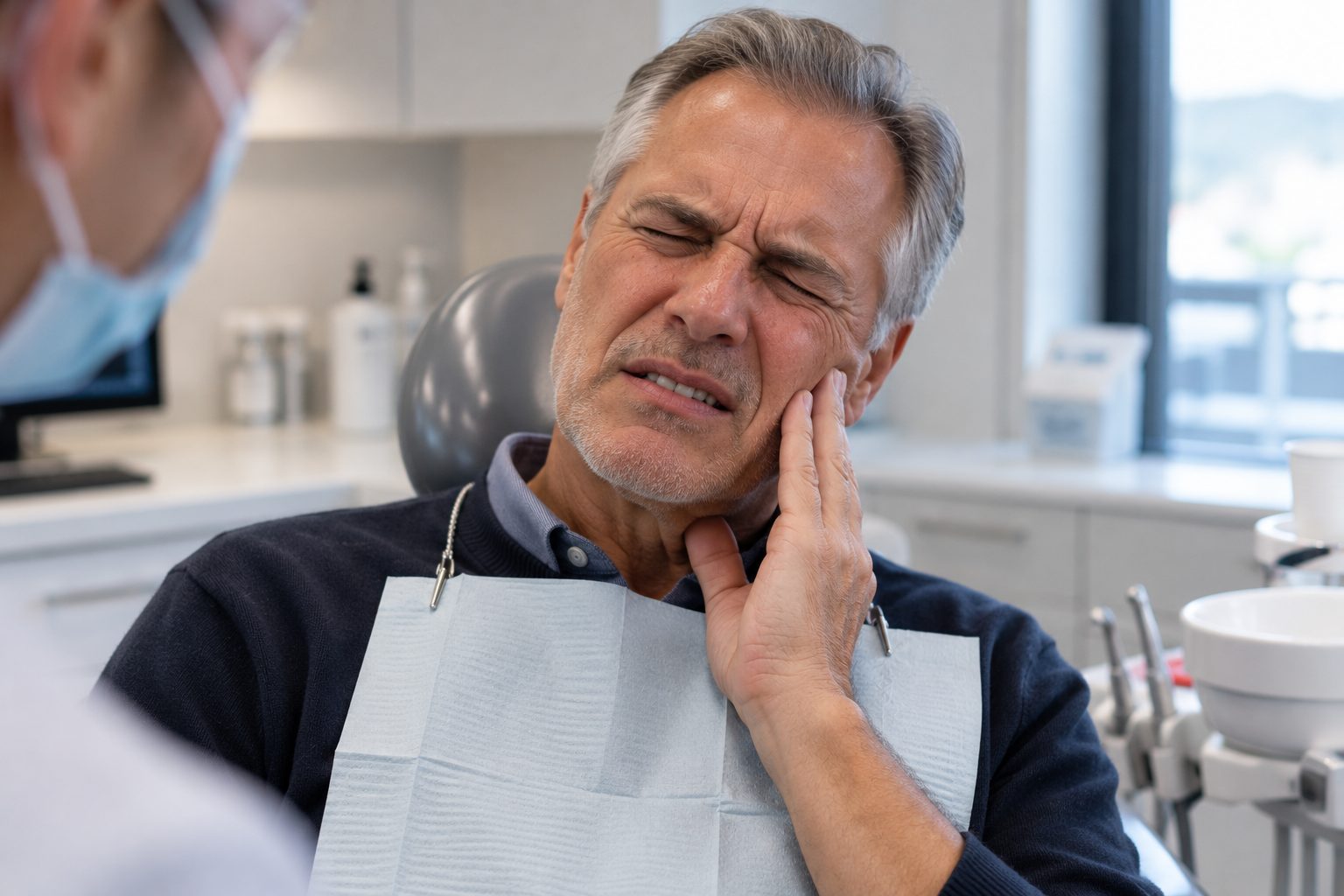
Pain tells us something is wrong. It doesn't always tell us what.
A tooth can hurt for many different reasons. Sometimes the source is relatively straightforward. Other times, several dental problems can produce similar symptoms.
Where the tooth hurts, what triggers the pain, how long it lasts and whether there are other symptoms all provide useful information, but a diagnosis usually requires examining the tooth.
If you're unsure what's causing the pain, you don't need to figure it out before you call.
What are you feeling?
Toothaches don't all feel the same.
Pain when you bite
Pain with biting or chewing can occur for several reasons, including problems involving the tooth, a restoration or the tissues around it.
Sensitivity to cold or heat
Temperature sensitivity can occur with exposed tooth structure, decay, cracks, changes inside a tooth and other dental conditions.
A constant or throbbing ache
Persistent or spontaneous pain is a reason to have the tooth assessed, particularly when it is significant or worsening.
A sharp pain
Brief sharp pain can have several possible sources. What triggers it and what the tooth looks like clinically help us understand what may be happening.
Pain that's difficult to locate
Dental pain is not always easy to pinpoint. Sometimes a patient can feel pain without being certain which tooth is responsible.
Pain with swelling
Tooth pain accompanied by swelling deserves prompt attention because infection may be involved.
The way a tooth hurts can give us clues, but symptoms alone don't reliably identify the cause.
Possible causes
There are several reasons a tooth can hurt.
Tooth decay
A cavity can eventually cause sensitivity or pain as it progresses deeper into the tooth.
A cracked or damaged tooth
Cracks, fractures and broken tooth structure can cause pain or sensitivity, particularly when biting.
A damaged or failing restoration
A filling, crown or other restoration may sometimes be associated with symptoms if the tooth or restoration has changed.
Inflammation or infection inside the tooth
Problems involving the dental pulp (the tissue inside the tooth) can cause significant pain and may sometimes require root canal treatment or another form of care.
Gum or supporting-tissue problems
Pain around a tooth does not always originate from inside the tooth itself.
Tooth sensitivity
Exposed or sensitive tooth structure can cause discomfort, particularly with temperature or certain foods.
This isn't a diagnostic checklist. More than one condition can produce similar symptoms.
When to call
Don't wait for pain to become unbearable.
Significant, persistent or worsening tooth pain should be assessed. Call us sooner if the pain is interfering with eating, sleeping or normal activities, or if you notice other changes around the tooth.
Call us promptly if:
- Pain is significant or getting worse.
- Pain persists rather than settling.
- The tooth hurts when you bite.
- Part of the tooth has broken.
- You notice swelling around the tooth or gums.
- You are unsure how urgent the problem is.
Seek urgent medical care if tooth pain is accompanied by difficulty breathing or swallowing, rapidly increasing or extensive facial or neck swelling, or other signs of a medical emergency.
Call 911 if you believe you are experiencing a medical emergency.
Your assessment
First, we find the source of the pain.
Listen
We'll ask where the pain is, when it started, what triggers it and how it has changed.
Examine
We'll examine the tooth and surrounding area and assess relevant dental findings.
Investigate
Depending on the problem, additional tests or dental X-rays may be useful in identifying the source.
Explain
Once we understand what is happening, we'll discuss what can be done and whether treatment should happen immediately, at another appointment or with another provider.
What happens next
Treatment depends on why the tooth hurts.
A filling or restorative treatment
If tooth structure or an existing restoration is involved, restorative treatment may be appropriate.
Root canal treatment
If the tissue inside the tooth is significantly inflamed or infected, root canal treatment may sometimes be considered to retain the tooth.
Tooth extraction
If a tooth cannot reasonably be maintained, or removal is otherwise the appropriate option, an extraction may be considered.
Other care
Some sources of dental pain require a different approach or specialist assessment. We'll explain when referral is the better next step.
Until you're seen
What can I do while I'm waiting?
Avoid chewing on the painful tooth if that makes the symptoms worse, and keep the area as clean as you comfortably can.
Over-the-counter pain medication may be appropriate for some people when taken according to the product directions, but individual medical conditions, allergies and medications can affect what is safe for you. If you're unsure, speak with a pharmacist or healthcare professional.
Do not place aspirin directly against the tooth or gums.
Common questions
Common questions about toothaches.
Can a toothache go away on its own?+
Some dental pain can fluctuate or temporarily settle, but improvement does not necessarily mean that the underlying problem has resolved. Persistent, significant or recurring pain should be assessed.
How do I know which tooth is causing the pain?+
Sometimes it's obvious, but dental pain can be difficult to localize. Examining the teeth and, when appropriate, using dental tests or X-rays can help identify the source.
Does a toothache mean I need a root canal?+
No. Tooth pain has many possible causes. Root canal treatment is considered only when the condition of the tooth and the tissue inside it makes that treatment appropriate.
Does tooth pain mean I have a cavity?+
Not necessarily. Decay is one possible cause, but cracks, restorations, sensitivity, gum problems and other conditions can also cause dental pain.
What if my tooth hurts when I bite?+
Pain with biting can have several causes and should not be diagnosed from that symptom alone. If it persists or is significant, have the tooth assessed.
Is a toothache with swelling an emergency?+
Tooth pain with swelling should be assessed promptly because infection may be involved. Difficulty breathing or swallowing, rapidly increasing or extensive facial or neck swelling, or other signs of a medical emergency require urgent medical care.
Can you see me today for a toothache?+
We make every effort to accommodate urgent dental concerns promptly, often the same day.
I'm nervous because I haven't been to the dentist in a long time. Can you help?+
Yes. You don't need to feel embarrassed about how long it has been since your last dental visit. Tell us when you call if you're feeling anxious. Nitrous oxide may be available for appropriate patients, and we can discuss ways to make the visit more comfortable.
Related care
Have a tooth that won't stop hurting?
Call us and tell us what you're experiencing. We'll help determine how promptly you should be seen and what the next step should be.
In an emergency, call to speak with a team member who can help triage your situation. For non-urgent visits, feel free to email us at reception@smilemail.ca or send an appointment request. We reply within one business day.
We'll see you as promptly as we can, often the same day.