
Dental Abscess & Swelling
Swelling around a tooth or your face?
Swelling around a tooth, gum, jaw or face can be associated with a dental infection and should be taken seriously. Call us promptly so we can help determine what kind of care you need.
Difficulty breathing or swallowing, rapidly increasing or extensive facial or neck swelling, or other signs of a medical emergency require urgent medical care. Call 911 if you believe you are experiencing a medical emergency.
We make room for urgent problems and will see you as promptly as we can, often the same day.
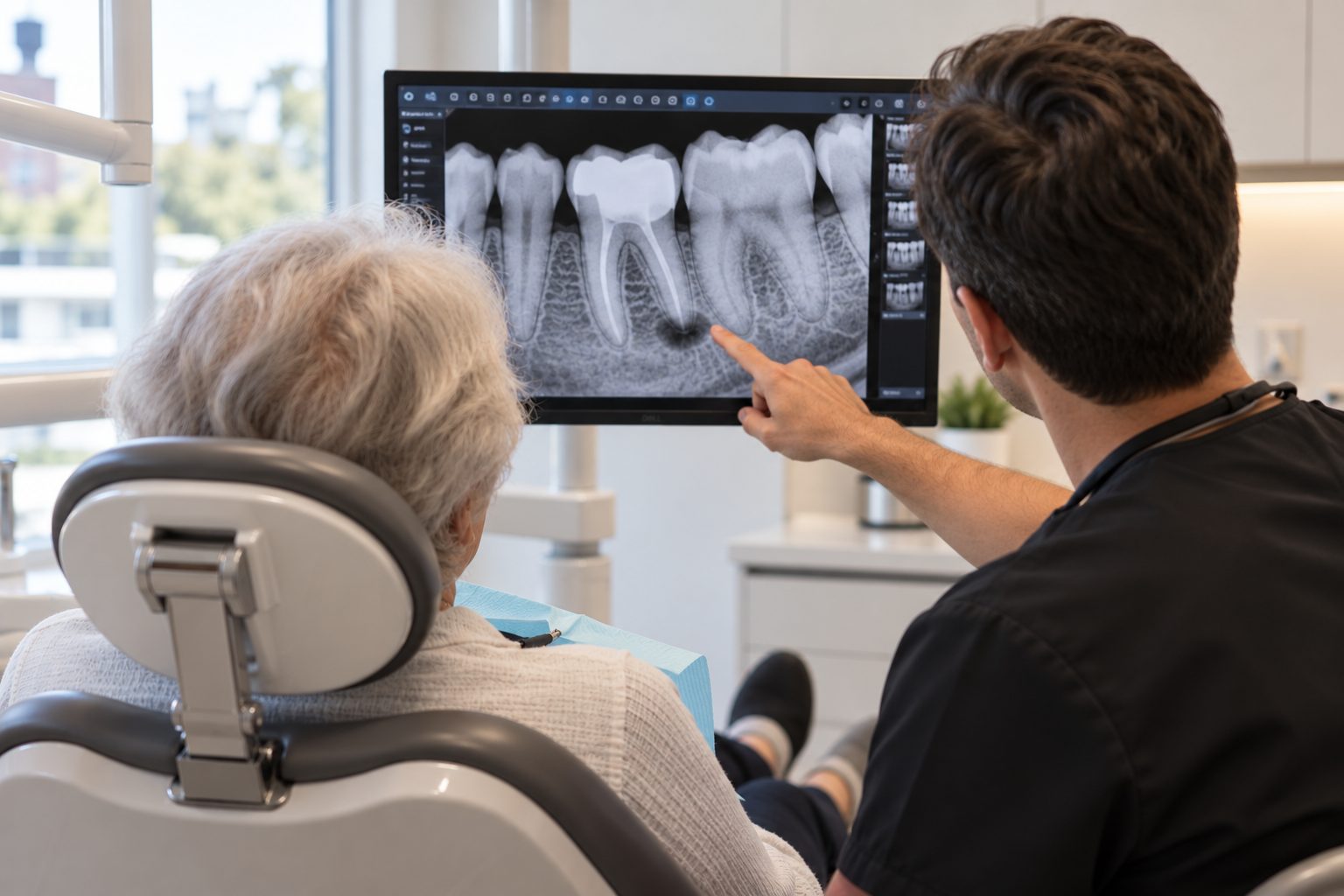
Dental swelling
Swelling can be a sign of infection.
A dental infection can begin in a tooth or in the tissues around it. As inflammation or infection develops, you may notice tenderness, swelling, pain, a bad taste or other changes around the tooth or gums.
Some dental infections remain relatively localized. Others can spread beyond the immediate area. The amount of pain alone does not tell us how serious the problem is.
If you notice new dental or facial swelling, call us rather than waiting for it to become more painful.
What are you noticing?
Dental swelling can show up in different ways.
Swelling beside a tooth or along the gum
A localized area of swelling may be associated with a problem involving the tooth, gum or surrounding tissues.
A bump on the gum
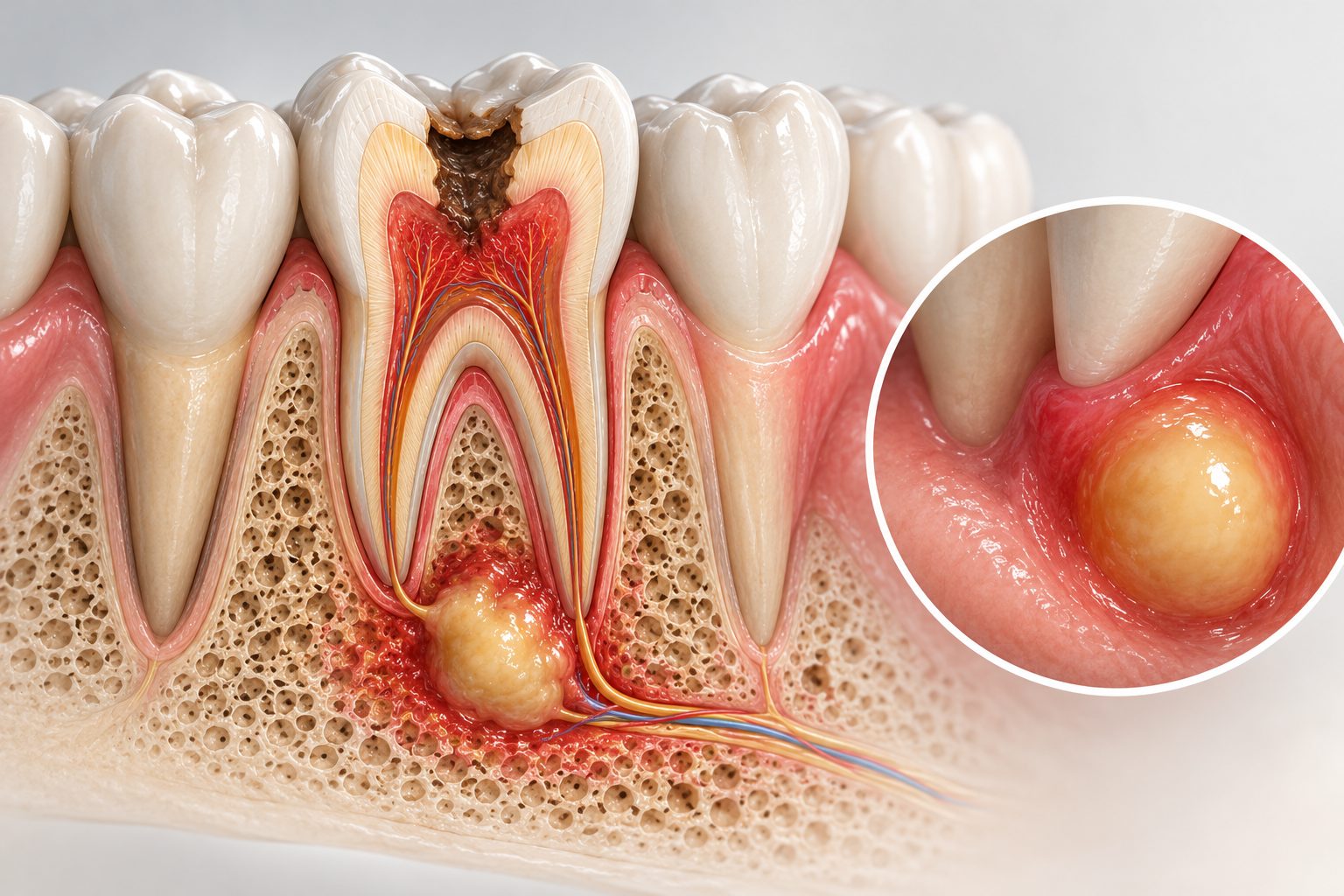
A small bump or pimple-like area on the gum can sometimes occur when infection is draining from around a tooth. Even if it is not particularly painful, the source should be assessed.
Swelling of the cheek or face
Facial swelling can indicate that inflammation or infection has extended beyond the immediate area around a tooth and warrants prompt attention.
Jaw or neck swelling
Swelling extending toward the jaw or neck deserves particular attention, especially if it is increasing or accompanied by other symptoms.
Swelling with tooth pain
Toothache and swelling together can occur when infection or inflammation is associated with a tooth.
Swelling without much pain
Dental infection is not always accompanied by severe pain. A painless or mildly uncomfortable swelling should not automatically be ignored.
You do not need to know whether it is an “abscess” before you call. New dental or facial swelling is enough reason to ask.
Dental abscess
What is a dental abscess?
A dental abscess is a collection of pus associated with infection. It can develop from an infection involving a tooth or the tissues supporting it.
The important question isn't simply whether something can be labelled an abscess. We need to determine where the infection is coming from, how extensive it is and what needs to be done about the source.
When to get help
Some swelling needs immediate medical attention.
Call C&ND promptly if you notice:
- Swelling around a tooth or gum.
- A bump or draining area on the gum.
- Tooth pain accompanied by swelling.
- Facial swelling that appears dental in origin.
- Swelling that is persistent or getting worse.
- A bad taste or drainage associated with a tooth.
- Uncertainty about how urgent the problem is.
Seek urgent medical care rather than waiting for a routine dental appointment if you are experiencing:
- Difficulty breathing.
- Difficulty swallowing.
- Rapidly increasing or extensive facial or neck swelling.
- Significant facial swelling accompanied by other concerning systemic symptoms.
- Other symptoms suggesting a medical emergency.
If you believe you are experiencing a medical emergency, call 911 or seek emergency medical care.
Your assessment
The first step is finding the source.
Listen
We'll ask when the symptoms started, where the swelling is located, whether you have pain and how things have changed.
Examine
We'll assess the tooth, gums and surrounding tissues to understand where the problem may be coming from.
Investigate
Dental X-rays or other appropriate clinical tests may help us evaluate the tooth and surrounding structures.
Plan
Once we understand the likely source and extent of the problem, we'll explain what needs to happen next.
Treatment
Treating an infection means dealing with its source.
The appropriate treatment depends on where the infection is coming from and the condition of the tooth and surrounding tissues.
Root canal treatment
If infection involves the tissue inside a tooth and the tooth can reasonably be retained, root canal treatment may sometimes be considered.
Tooth extraction
If a tooth cannot reasonably be maintained, removing it may sometimes be the appropriate way to address the source.
Periodontal or other treatment
When the source involves the gums or supporting tissues, or when specialist care would be preferable, the treatment pathway may be different.
The goal is not simply to make the swelling disappear. It is to understand and manage what is causing it.
If it starts to feel better
Improvement doesn't always mean the problem is gone.
A swollen area may sometimes drain or become less painful. That can make the problem feel as though it has resolved, but the underlying source may still be present.
If you've had swelling, drainage or a gum bump associated with a tooth, it is still worth having the area assessed.
Common questions
Common questions about dental abscesses and swelling.
Is a dental abscess an emergency?+
A dental abscess should be assessed promptly. The level of urgency depends on the extent of the infection and your symptoms. Difficulty breathing or swallowing, rapidly increasing or extensive facial or neck swelling, or other signs of a medical emergency require urgent medical care.
Can I have a dental abscess without severe pain?+
Yes. The amount of pain does not always reflect the extent of a dental infection. Swelling, drainage or a gum bump should still be assessed even if the area is not very painful.
What does an abscess look like?+
Dental infections can present in different ways, including swelling around a tooth or gum, a pimple-like bump on the gum, drainage or facial swelling. Appearance alone cannot reliably determine the source or severity.
Will a dental abscess go away on its own?+
Symptoms can sometimes improve temporarily or an area may drain, but that does not necessarily mean the underlying source has resolved. Dental infection should be assessed.
Do I need antibiotics for a dental abscess?+
Not every dental infection requires antibiotics. Whether they are appropriate depends on the clinical situation, and dental treatment may still be needed to address the source.
Will I need a root canal or extraction?+
Not necessarily. Treatment depends on which tooth or tissues are involved, the extent of the problem and whether the tooth can reasonably be maintained.
Can you see me today for facial or dental swelling?+
We make every effort to accommodate urgent dental problems promptly, often the same day. If you have symptoms suggesting a medical emergency, seek urgent medical care rather than waiting for a dental appointment.
I'm anxious about coming in. Is nitrous oxide available?+
Nitrous oxide may be available for appropriate patients who are anxious about dental treatment. Let us know when you call if you're nervous or haven't been to the dentist in a while so we can discuss how to make the visit more comfortable.
Related care
Have dental or facial swelling?
Call us and tell us what you're experiencing. We'll help determine the appropriate next step and whether you need prompt dental or medical attention.
In an emergency, call to speak with a team member who can help triage your situation. For non-urgent visits, feel free to email us at reception@smilemail.ca or send an appointment request. We reply within one business day.
Difficulty breathing or swallowing, rapidly increasing or extensive facial or neck swelling, or other signs of a medical emergency require urgent medical care.
We'll see you as promptly as we can, often the same day.