Restorative Dentistry
Repairing teeth. Rebuilding what's missing.
Restorative dentistry focuses on repairing damaged teeth and replacing teeth when needed, helping you maintain comfort, function and a healthy, stable smile over time.
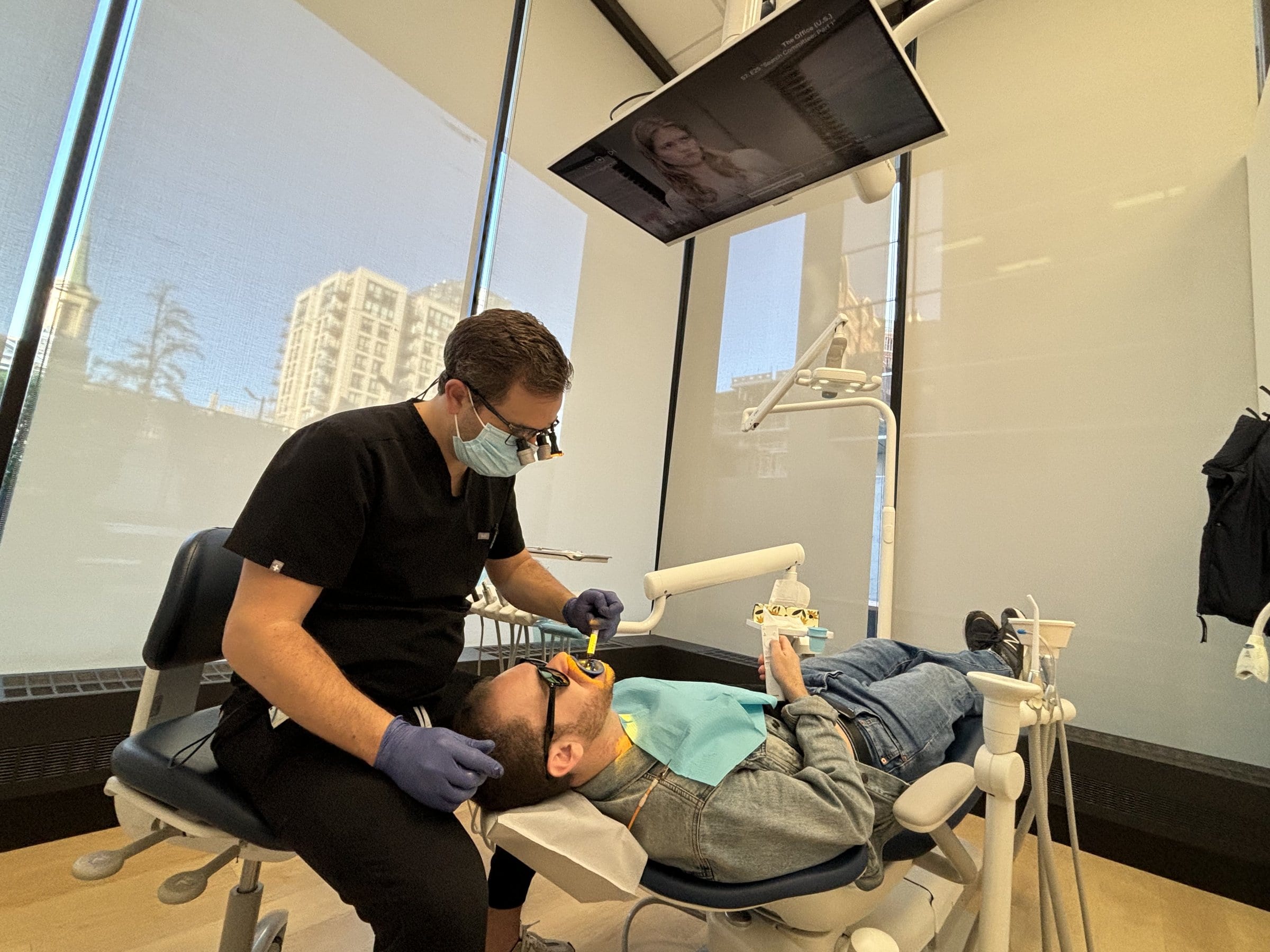
Restorative dental care
The right restoration starts with the tooth.
Teeth can become damaged by decay, fractures, wear, previous dental work or injury. Other teeth may already be missing.
Restorative dentistry is about understanding what remains, what needs to be repaired and what will provide a sensible long-term solution.
Sometimes that means a relatively small restoration. Sometimes a tooth needs more protection. And when a tooth is missing, there may be several ways to replace it.
The goal is to preserve healthy tooth structure while restoring what the tooth needs to function well.
Repairing teeth
Different problems require different restorations.
A tooth that is painful, infected or extensively damaged may require other treatment before it can be restored.
Replacing teeth
When a tooth is missing, there may be more than one option.
The right way to replace a missing tooth depends on where the space is, the condition of the neighbouring teeth, your bite, the supporting tissues and your priorities.
Rather than starting with a particular treatment, we first look at the situation as a whole.
Not sure which option makes sense?
Start with our guide to Replacing Missing Teeth →Compare implants, bridges and dentures side by side.
Dental implants
Implant care involves more than one step.
Dental implant treatment includes both the implant placed in the jaw and the crown that ultimately replaces the visible tooth.
At Chandler & Nightingale Dental, we plan your implant treatment from start to finish. A trusted periodontal specialist places the implant, and we design and fit the final crown: the part of the implant you see, chew with and smile with.
This coordinated approach allows the surgical phase to be handled by a clinician focused on implant placement while your final crown remains integrated with your ongoing dental care at C&ND.
Planning restorative care
Not every damaged tooth needs the same solution.
How much healthy tooth remains
The amount and location of remaining tooth structure help determine what type of restoration is appropriate.
What the tooth needs to do
Front and back teeth experience different forces and may have different functional and aesthetic considerations.
What has already been done
Existing fillings, crowns, root canal treatment and previous damage all affect how we plan the next restoration.
How the treatment fits the bigger picture
We consider the neighbouring teeth, your bite and your longer-term dental needs, not just the tooth in isolation.
More treatment isn't automatically better treatment.
Keeping teeth when we can
Repair the tooth or replace it?
When a tooth has significant damage, one of the first questions is whether it can reasonably be restored.
If it has enough healthy structure and a favourable outlook, repairing and maintaining the tooth may make sense. If the tooth is too compromised to provide a predictable result, removing it and considering replacement may be the better path.
We explain the trade-offs before deciding what comes next.
Common questions
Common questions about restorative dentistry.
What is restorative dentistry?+
Restorative dentistry focuses on repairing damaged teeth and replacing missing teeth. Treatments can include fillings, crowns, bridges, implant crowns and dentures depending on what is needed.
What's the difference between a filling and a crown?+
A filling repairs a selected portion of a tooth directly. A crown covers more of the tooth and may be considered when greater protection or restoration is required.
How do I know whether a damaged tooth can be saved?+
That depends on how much healthy tooth remains, where the damage extends, the health of the supporting tissues and what would be required to restore the tooth predictably.
What are my options for replacing a missing tooth?+
Depending on the situation, options may include an implant-supported crown, dental bridge or removable denture. Not every option is appropriate for every patient.
Do you place dental implants at C&ND?+
A trusted periodontal specialist places the implant. We plan your treatment, coordinate with the specialist, and design and fit the final crown once the implant is ready.
Does a root canal always need a crown?+
Not every root-canal-treated tooth is restored in exactly the same way. The appropriate restoration depends on the tooth, how much healthy structure remains and how it functions.
Do you accept new restorative dentistry patients?+
Yes. Dr. Michael Nightingale and Dr. Ali Lubelsky are welcoming new patients at our Yonge & St. Clair practice.
Related care
Need to repair or replace a tooth?
Start with an assessment. We'll look at the tooth, explain the available options and help you understand what makes sense for your situation.
Or feel free to email us at reception@smilemail.ca. We reply to appointment requests within one business day.
Dr. Michael Nightingale and Dr. Ali Lubelsky are welcoming new patients.