
Root Canal Treatment
At Yonge & St. Clair.
When the tissue inside a tooth becomes significantly inflamed or infected, root canal treatment may sometimes allow the tooth to be retained. We assess the tooth first and determine whether root canal treatment or another approach makes sense.
Have significant tooth pain or swelling? Call us so we can help determine how promptly you should be seen.

Root canal therapy
The goal is to treat the inside of the tooth and keep the tooth when appropriate.
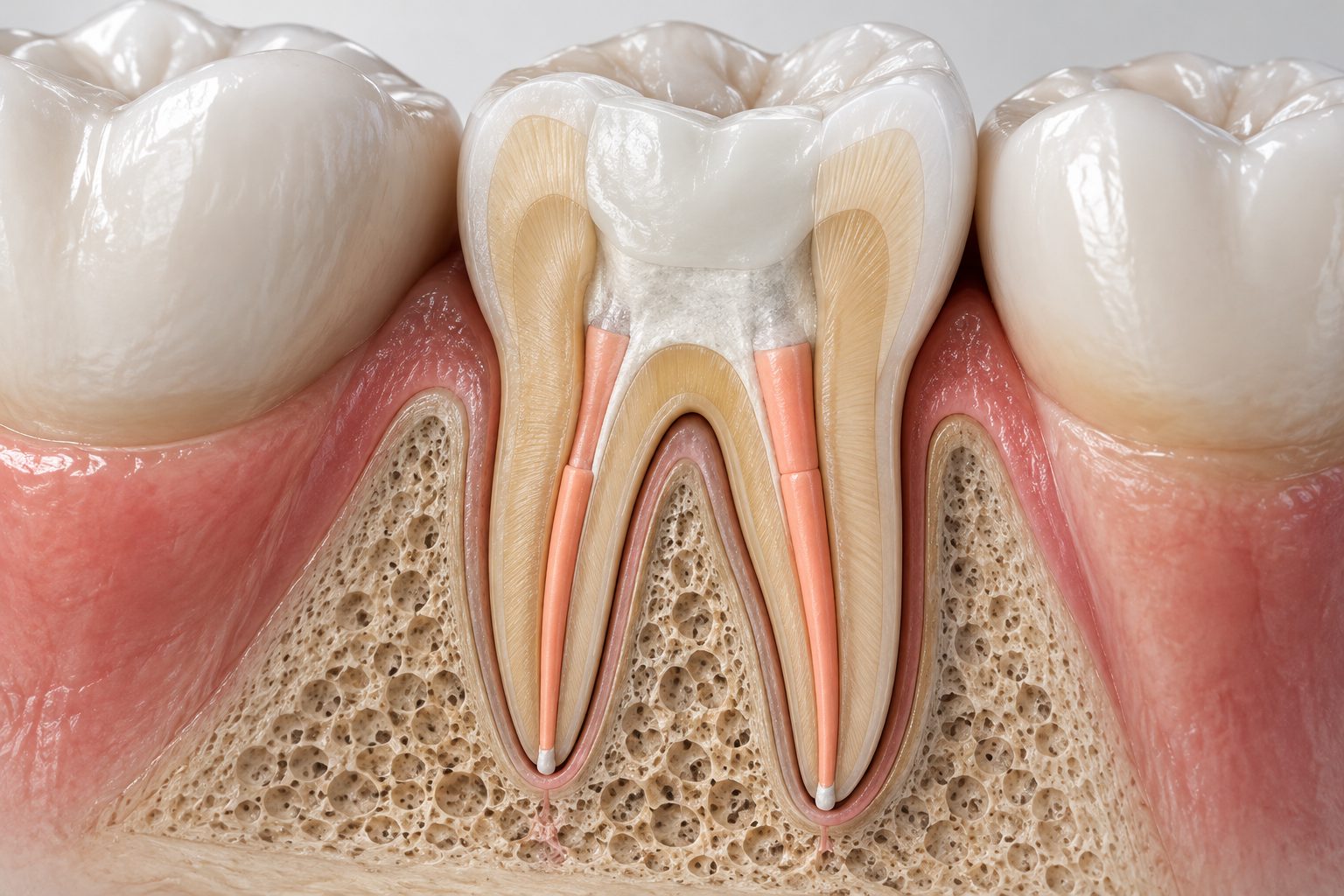
Inside each tooth is a space containing dental pulp, tissue that includes nerves and blood vessels. If that tissue becomes significantly inflamed or infected, simply repairing the outside of the tooth may not address the problem.
Root canal treatment removes the affected tissue from inside the tooth, cleans and treats that internal space, and allows the tooth to be restored.
Needing a root canal doesn't automatically mean the tooth has to be removed. The first question is whether the tooth can reasonably be maintained.
Why root canals are needed
Different problems can affect the tissue inside a tooth.
Deep tooth decay
Decay that progresses far enough into a tooth can affect the dental pulp.
A crack or fracture
Damage extending deeper into a tooth may allow the pulp to become inflamed or infected.
Previous dental treatment
A tooth that has undergone significant restorative treatment can sometimes develop problems involving the pulp.
Dental trauma
An injury can affect the pulp even when the outside of the tooth does not initially appear severely damaged.
The reason for treatment matters because the condition of the entire tooth, not simply the pulp, helps determine whether root canal treatment is appropriate.
Assessing the tooth
Symptoms are part of the picture. They aren't the diagnosis.
Potential findings can include:
A toothache does not automatically mean you need a root canal.
- Persistent or spontaneous tooth pain.
- Lingering sensitivity to temperature.
- Pain when biting.
- Swelling or tenderness.
- Changes around the tooth visible on a dental X-ray.
- Sometimes relatively few symptoms.
We consider your symptoms together with the clinical examination, appropriate dental tests and X-rays before recommending treatment.
The process
What does a root canal involve?
Assess the tooth
We first determine the likely source of the problem and whether the tooth is suitable for treatment.
Access the inside of the tooth
An opening is made so the affected pulp tissue and root canal spaces can be treated.
Clean and treat the canals
The internal canal spaces are carefully cleaned, shaped and disinfected.
Seal the canal system
Once prepared, the canals are filled and sealed.
Specialist care
Some teeth are better treated by an endodontist.
Chandler & Nightingale Dental provides root canal treatment in our office, and works alongside specialists when required. Some teeth are more complex because of their anatomy, previous treatment, the nature of the infection or other clinical factors.
When we believe specialist endodontic care offers the better treatment pathway, we'll explain why and coordinate a referral.
The goal isn't to keep every procedure in-house. It's to get the tooth the right care.
Restoring the tooth
Treatment doesn't end with the canals.
After root canal treatment, the tooth needs to be restored appropriately so it can function and be protected over time.
What that restoration looks like depends on which tooth was treated, how much healthy tooth structure remains and the forces the tooth needs to withstand.
Common questions
Common questions about root canal treatment.
How do I know if I need a root canal?+
Symptoms can provide clues, but determining whether a tooth needs root canal treatment usually requires an examination and appropriate dental tests or X-rays. Tooth pain alone does not automatically mean a root canal is needed.
Does a root canal hurt?+
Root canal treatment is performed using local anaesthetic. The tooth may already be painful or inflamed before treatment, and some tenderness can occur afterward, but keeping you comfortable is part of planning and providing the procedure.
Can antibiotics fix an infected tooth instead of a root canal?+
Antibiotics may be appropriate in some dental infections, but they do not necessarily eliminate the source of infection inside a tooth. The tooth may still require dental treatment.
Do I need a crown after a root canal?+
Not every tooth is restored in exactly the same way. The appropriate restoration depends on the tooth, how much structure remains and how it functions.
Is it better to have a root canal or pull the tooth?+
It depends on whether the tooth can reasonably be restored and maintained. We consider the condition and prognosis of the tooth before recommending root canal treatment or extraction.
Do you perform root canals at C&ND?+
Yes. We provide root canal treatment in our office, and work alongside specialist endodontists when required. When a tooth would be better managed by an endodontist, we'll explain why and coordinate referral.
What is an endodontist?+
An endodontist is a dentist with specialty training focused on diagnosing and treating problems involving the dental pulp and tissues around the roots of teeth. We refer to endodontists when specialist care is appropriate.
I'm nervous about having a root canal. Is nitrous oxide available?+
Nitrous oxide may be available for appropriate patients who are anxious about treatment. Let us know about your concerns so we can discuss comfort options with you.
Related care
Think you may need a root canal?
Start with an assessment. We'll determine what's happening with the tooth, explain your options and let you know whether treatment at C&ND or specialist care makes the most sense.
Or feel free to email us at reception@smilemail.ca. We reply to appointment requests within one business day.
If you're experiencing significant tooth pain or swelling, call the office rather than waiting for an appointment request to be reviewed.