
Dental Fillings
At Yonge & St. Clair.
Dental fillings repair selected areas of tooth decay or damage while preserving the healthy tooth structure around them. We assess the tooth first and recommend a restoration based on what the tooth actually needs.
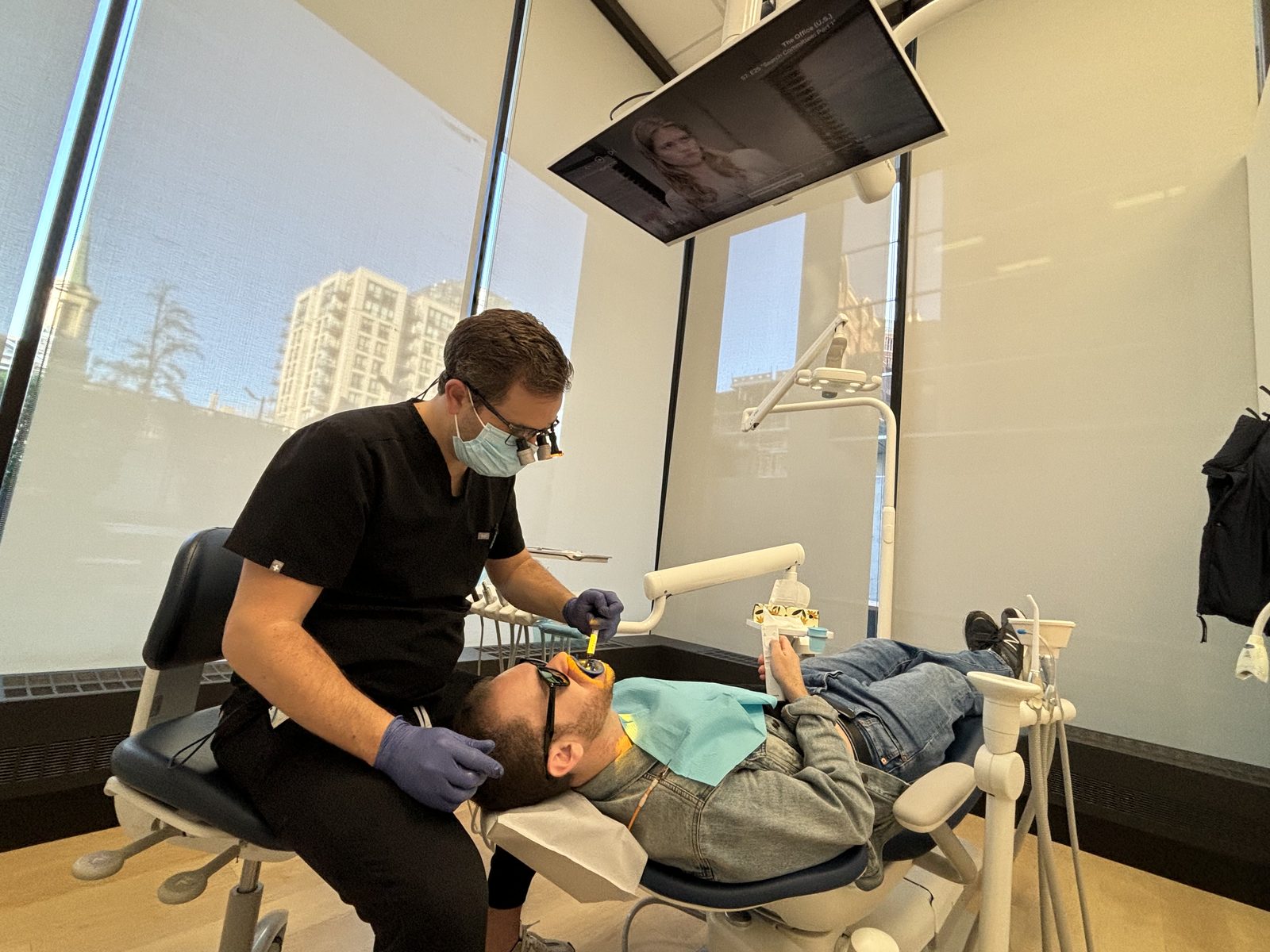
Restoring a tooth
A filling repairs the part of the tooth that needs it.
When decay or damage affects a limited area of a tooth, a filling can replace the compromised tooth structure and restore the tooth's shape and function.
The amount and location of the damage matter. A relatively small area may be well suited to a filling, while a tooth with more extensive damage may require a different type of restoration.
The goal is to repair what needs repairing while preserving healthy tooth structure.
Why fillings are used
Not every filling starts with a toothache.
Tooth decay
A cavity can develop without causing obvious symptoms, particularly when it is still relatively small.
A chipped or damaged area
In selected situations, a filling may be used to restore tooth structure that has been lost or damaged.
A worn or failing filling
Existing restorations can wear, fracture or develop problems around their edges over time.
A filling that has come out
If a filling is lost, the remaining tooth should be assessed to determine why it happened and how the area should be restored.
Whether a tooth needs treatment depends on what we find, not simply whether it hurts.
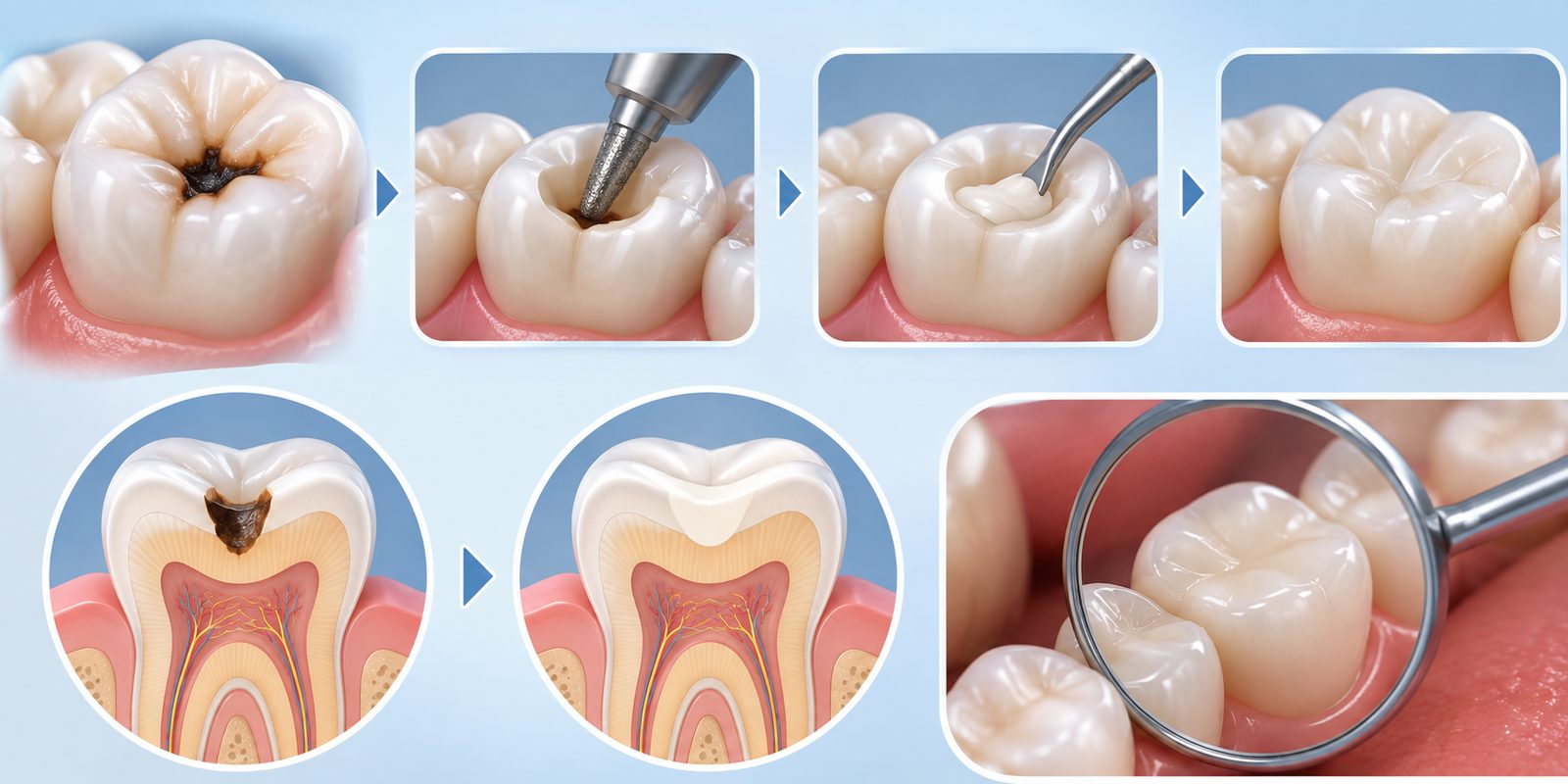
Before the filling
First, we determine how much of the tooth is involved.
We examine the tooth and, when appropriate, use dental X-rays or other clinical information to understand the location and extent of the problem. That helps us determine whether a filling is appropriate or whether the tooth would be better managed with another type of restoration.
Size and location
The amount of tooth involved and where the damage sits affect how the tooth can be restored.
Remaining tooth structure
A restoration needs enough healthy tooth around it to function predictably.
Forces on the tooth
The way the tooth functions and the forces it receives also influence treatment planning.
Composite fillings
Tooth-coloured dental fillings.
Composite resin is a tooth-coloured restorative material that can be bonded directly to the tooth and shaped to replace the area being restored.
Its colour can be selected to blend with the surrounding tooth, making it useful in areas where appearance matters as well as for many routine restorations.
The process
What should I expect?
Numb the tooth
Local anaesthetic may be used when appropriate to keep the tooth comfortable during treatment.
Prepare the area
The damaged or decayed tooth structure is removed and the area is prepared for the restoration.
Restore the tooth
The restorative material is placed and shaped to rebuild the missing portion of the tooth.
Check the bite
We check how the restored tooth contacts the opposing teeth and make adjustments when needed.
Common questions
Common questions about dental fillings.
How do I know if I have a cavity?+
Some cavities cause sensitivity, discomfort or visible changes, while others cause no noticeable symptoms. Dental examination and, when appropriate, X-rays can help identify decay and determine whether treatment is needed.
Does every cavity need a filling?+
Not every area of early tooth demineralization is managed in exactly the same way. Whether a tooth requires a filling depends on the location and extent of the decay and the clinical situation.
Does getting a filling hurt?+
Local anaesthetic may be used when appropriate to keep the tooth comfortable during treatment. Some temporary sensitivity can occur afterward.
What are tooth-coloured fillings made of?+
Tooth-coloured fillings are commonly made from composite resin, a restorative material that can be bonded and shaped directly on the tooth.
How long does a dental filling last?+
There is no single lifespan for every filling. Longevity depends on factors such as the size and location of the restoration, the forces on the tooth, oral habits and changes to the tooth over time.
How do I know if I need a filling or a crown?+
A filling repairs a selected portion of a tooth, while a crown covers more of it. The appropriate choice depends on how much healthy tooth remains and how much support or protection the tooth requires.
Do old silver fillings need to be replaced?+
Not automatically. We assess existing restorations based on how they and the surrounding tooth are functioning rather than replacing them simply because of their age or material.
What should I do if a filling falls out?+
Contact us so the tooth can be assessed. A lost filling can leave tooth structure exposed, and the appropriate repair depends on why the restoration was lost and the condition of the remaining tooth.
Related care
Think you may need a filling?
We'll assess the tooth, explain what we find and recommend the amount of treatment that makes sense.
Or feel free to email us at reception@smilemail.ca. We reply to appointment requests within one business day.