Jaw Pain & TMJ
When your jaw doesn't feel right.
Assessment and care for jaw pain, clenching, grinding and other symptoms related to the jaw and bite at Yonge & St. Clair.
Jaw pain & TMJ
Jaw pain can have more than one cause.
Pain or tension around the jaw can involve the jaw joints, chewing muscles, teeth or a combination of factors. Some people notice clicking or limited movement. Others clench or grind their teeth, wake with tired jaw muscles or develop changes in the way their teeth are wearing.
The first step is understanding what you're experiencing and what may be contributing to it. An assessment helps us determine what we can manage in our office and when another type of care or specialist assessment would be more appropriate.
What are you noticing?
Start with the symptom.
Understanding the terminology
TMJ is the joint. TMD describes the disorder.
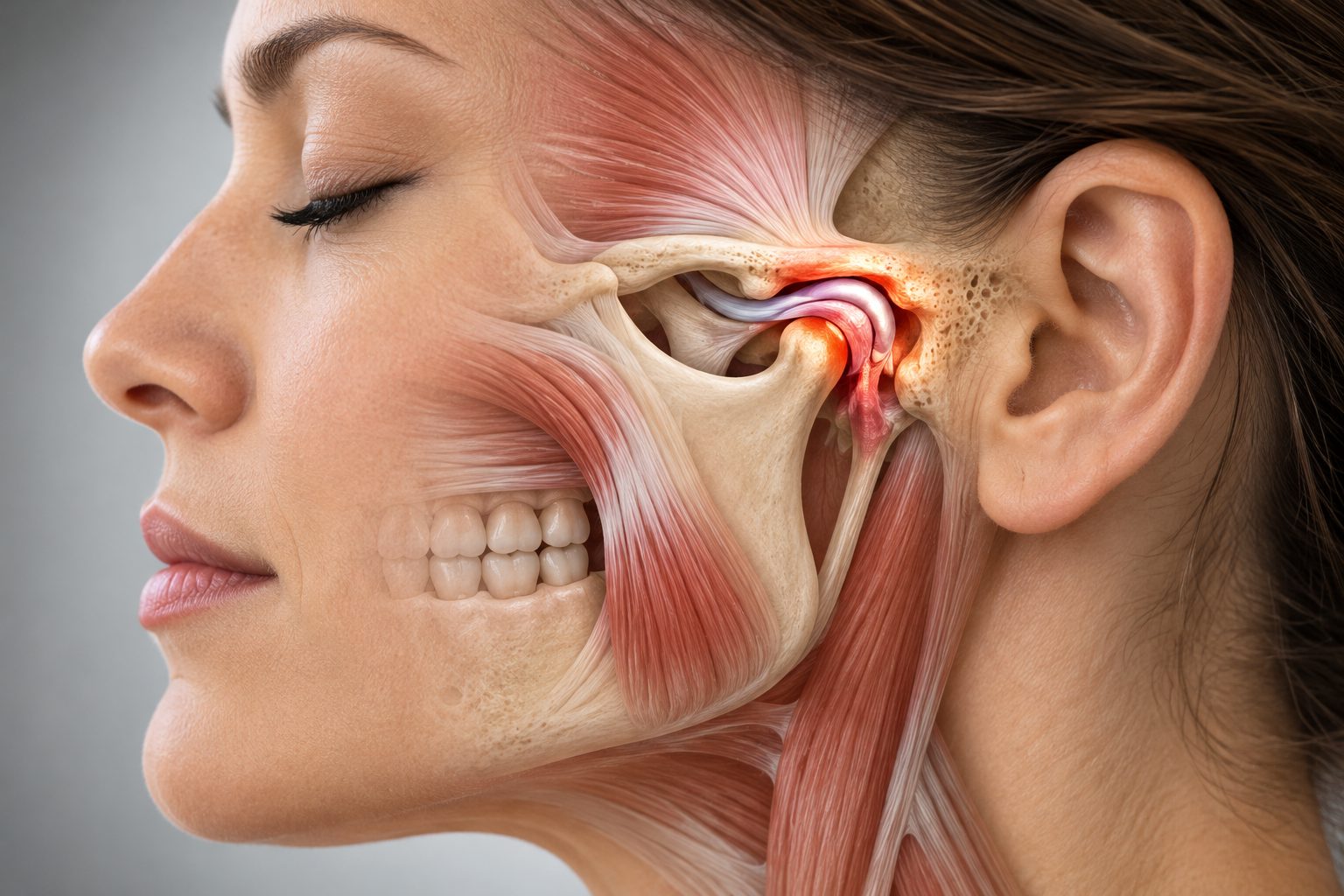
TMJ stands for temporomandibular joint, the joint connecting the lower jaw to the skull on each side of the face.
TMD, or temporomandibular disorder, is a broader term used for conditions involving the jaw joints, chewing muscles and related structures.
In everyday conversation, however, people often use “TMJ” to describe jaw pain or jaw-joint problems. We use both terms on this website so patients can find the information they're looking for.
Your assessment
We start by figuring out what may be contributing.
Your symptoms and history
Where it hurts, when it occurs, how long it has been happening and what makes it better or worse.
Jaw movement and muscles
Looking at movement, tenderness, range of motion and relevant joint or muscle findings.
Your teeth and bite
Looking for wear, fractures, existing restorations and other findings that may provide useful context.
Clenching and grinding
Discussing daytime or nighttime habits and signs that may suggest excess forces on the teeth.
Jaw pain doesn't always have a purely dental cause. If the findings suggest that another clinician or specialist should be involved, we'll explain why and help guide the next step.
Night guards
A night guard has a specific job.
Night guards are dental appliances worn over the teeth, most commonly while sleeping. Depending on the situation, they may be recommended to help protect teeth and restorations from forces associated with clenching or grinding.
A night guard is not a universal treatment for every type of jaw pain or TMD. Whether one is appropriate depends on what we're trying to accomplish.
Managing jaw pain
There isn't one treatment for every jaw problem.
Management depends on the symptoms, examination findings and likely contributing factors. For some patients, the focus may be protecting the teeth from grinding. For others, changes in habits or additional assessment may be appropriate.
When the problem falls outside what we should manage in a general dental practice, we'll recommend the appropriate next step rather than trying to treat everything ourselves.
When Botox makes sense for jaw pain, TMD or clenching, we coordinate it with a trusted provider and continue to look after the dental side of your care.
When to have it assessed
When jaw symptoms aren't settling down.
Consider having the problem assessed if you have:
- Persistent or worsening jaw pain.
- Difficulty or pain when opening your mouth.
- Recurrent jaw locking.
- Significant changes in how your jaw moves.
- Unexplained tooth wear or repeated chipping.
- Persistent morning jaw soreness or muscle fatigue.
Sudden severe symptoms, significant swelling, trauma, or difficulty swallowing or breathing may require a more urgent pathway rather than a routine jaw-pain appointment.
Common questions
Common questions about jaw pain and TMJ.
What does TMJ mean?+
TMJ refers to the temporomandibular joint. TMD refers more broadly to disorders affecting the jaw joints, chewing muscles and related structures, although “TMJ” is commonly used to describe these problems.
What causes jaw pain?+
Jaw pain can have several possible causes and may involve the jaw joint, chewing muscles, teeth or other structures. Clenching and grinding can contribute in some patients, but not every case of jaw pain has the same cause.
Why does my jaw click or pop?+
Jaw-joint sounds can occur for different reasons and do not necessarily mean treatment is required. Clicking accompanied by pain, locking, restricted movement or a significant change is more useful to assess clinically.
Can grinding my teeth cause jaw pain?+
Clenching or grinding can contribute to muscle fatigue, tenderness, tooth wear and other symptoms in some patients. An assessment can help determine whether those forces appear relevant to what you're experiencing.
Do I need a night guard for TMJ?+
Not necessarily. A night guard may be useful for specific purposes, particularly protecting teeth or restorations from grinding forces, but it is not the appropriate treatment for every type of jaw pain or TMD.
Can a dentist help with TMJ problems?+
A dentist can assess the teeth, bite, jaw movement, muscles and other relevant findings to help determine what may be contributing. Depending on the problem, management may occur in the dental office or involve another healthcare professional or specialist.
Do you offer Botox for TMJ or teeth grinding?+
When Botox makes sense for jaw pain, TMD or clenching, we coordinate it with a trusted provider and continue to look after the dental side of your care. We start by assessing your symptoms and discussing the appropriate next step based on what we find.
Related care
Jaw pain or grinding bothering you?
Start with an assessment. We'll look at what you're experiencing and help determine the appropriate next step.
Or feel free to email us at reception@smilemail.ca. We reply to appointment requests within one business day.