Sensitive Teeth
At Yonge & St. Clair.
Sensitivity to cold, heat, sweets or brushing can have several causes. A dental assessment can help identify why a tooth is sensitive and whether it needs treatment or simply a change in how it is cared for.

Tooth sensitivity
Sensitivity is a symptom, not a diagnosis.
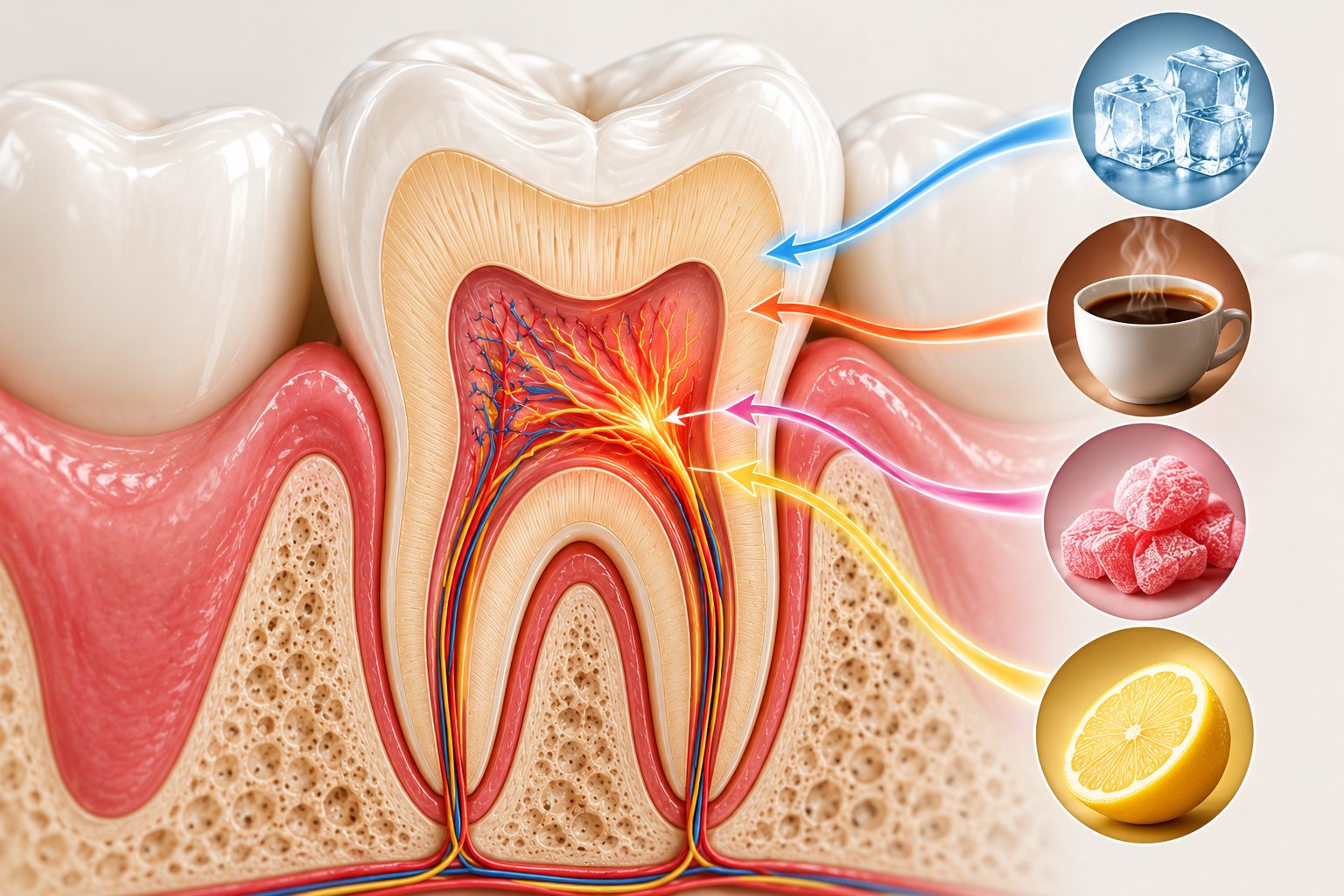
Sensitive teeth can happen when areas of the tooth become more exposed or when something changes within the tooth itself. Gum recession, enamel wear, cavities, cracks and other dental problems can all produce sensitivity, and they don't necessarily require the same treatment.
The important question is not simply how to make sensitivity go away, but why the tooth has become sensitive in the first place.
Possible causes
Why are my teeth sensitive?
Gum recession
When the gumline recedes, part of the root surface can become exposed and more sensitive to temperature or touch.
Enamel wear
Loss or thinning of the protective enamel can make the underlying tooth structure more sensitive.
A cavity
Decay can sometimes cause sensitivity, particularly as it progresses further into the tooth.
A cracked tooth
Cracks can cause sensitivity or discomfort, sometimes particularly with temperature changes or biting.
Clenching or grinding
Repeated forces on the teeth can contribute to wear, cracks or other changes that may be associated with sensitivity.
Recent dental treatment
Teeth can sometimes be temporarily sensitive after certain dental procedures. Whether this is expected or needs assessment depends on the treatment and how the symptoms develop.
New, persistent or worsening sensitivity is worth assessing, particularly when it affects one specific tooth or is accompanied by pain when biting, spontaneous pain or swelling.
Common questions
Common questions about sensitive teeth.
Why are my teeth suddenly sensitive?+
New sensitivity can have several causes, including gum recession, enamel wear, a cavity, a crack or changes related to recent dental treatment. If sensitivity appears suddenly, persists or affects one particular tooth, an examination can help determine what is causing it.
Can sensitive teeth mean I have a cavity?+
Sometimes. A cavity is one possible cause of tooth sensitivity, but it is not the only one. Gum recession, worn enamel, cracks and other dental changes can produce similar symptoms, which is why the pattern of sensitivity and a clinical examination are useful in determining the cause.
Can a sensitive tooth get better on its own?+
It depends on the cause. Some temporary sensitivity may settle, particularly after certain dental procedures, while sensitivity caused by decay, a crack or another ongoing problem may not. Persistent or worsening symptoms should be assessed rather than simply waiting for them to disappear.
Does toothpaste for sensitive teeth work?+
Desensitizing toothpastes can help some types of sensitivity, particularly sensitivity associated with exposed dentin. They do not treat every cause, however. If sensitivity is persistent, worsening or limited to one tooth, it is important to understand the underlying reason rather than relying only on toothpaste.
Can grinding my teeth cause sensitivity?+
Clenching and grinding can place repeated forces on the teeth and may contribute to wear, cracks or other changes that can be associated with sensitivity. If we see signs of grinding, we'll discuss whether it appears relevant to your symptoms and whether additional care may help.
When is tooth sensitivity an emergency?+
Sensitivity alone is not always a dental emergency. More significant or worsening pain, facial or gum swelling, trauma, a broken tooth or other acute symptoms may require more prompt assessment. If you're unsure, call the office and we can help determine how quickly you should be seen.
Related care
Have a sensitive tooth?
Dr. Michael Nightingale and Dr. Ali Lubelsky are welcoming new patients at Chandler & Nightingale Dental.
Or feel free to email us at reception@smilemail.ca. We reply to appointment requests within one business day.