Dental Crowns
At Yonge & St. Clair.
A dental crown can restore and protect a tooth when a filling alone would not provide enough support. We assess how much healthy tooth remains, what has happened to the tooth and what it needs to function over time.
Restoring a tooth
A crown protects more of the tooth.
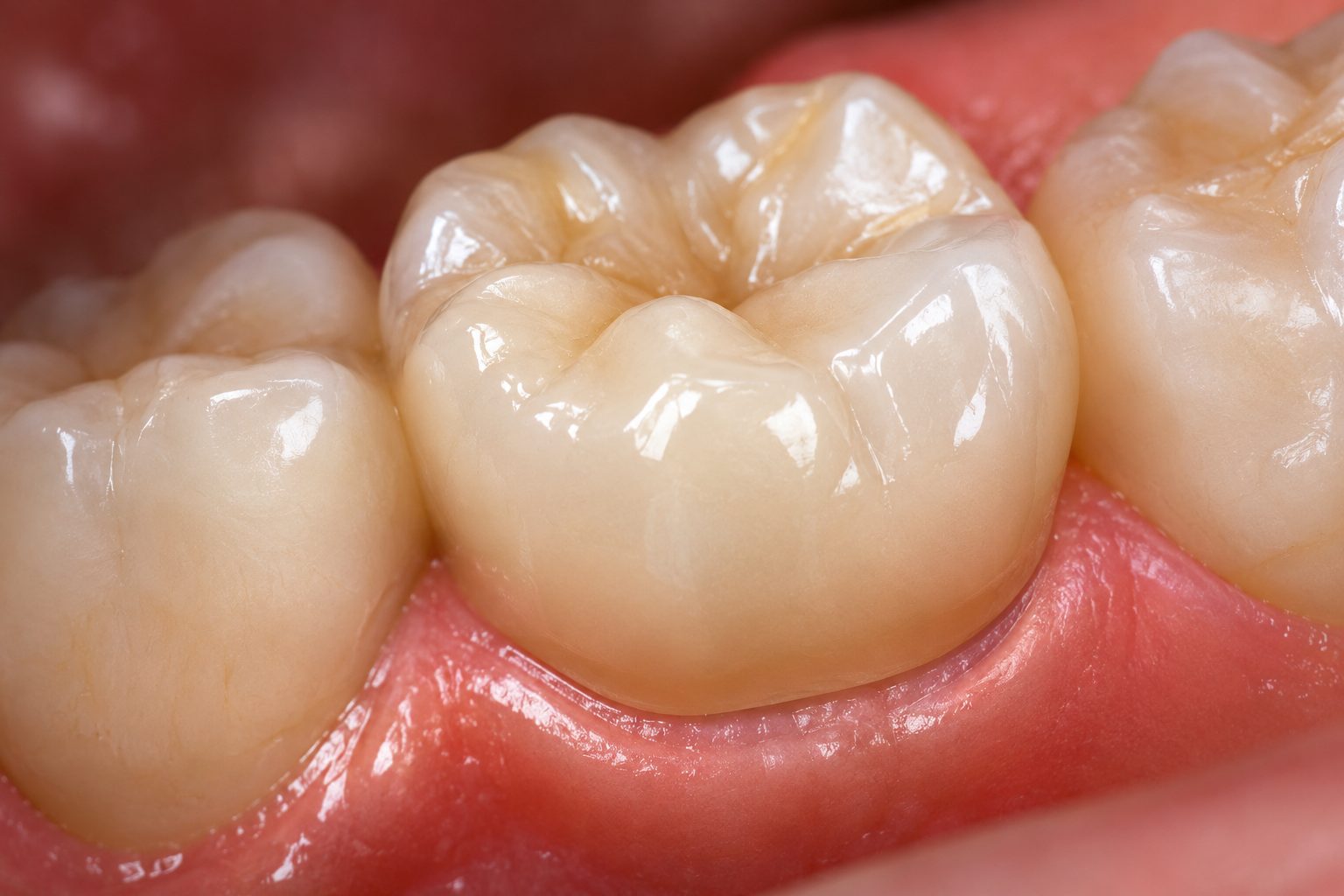
A filling replaces a selected portion of damaged tooth structure. A crown covers substantially more of the tooth and may be considered when the remaining tooth needs greater protection or restoration.
That can happen when a tooth has a large existing restoration, significant damage, a fracture or has undergone other treatment that changes how it needs to be restored.
The question isn't simply whether a crown can be placed. It's whether a crown is the right restoration for that tooth.
Why crowns are used
When a tooth needs more than a filling.
Extensive tooth damage
When a large portion of the tooth has been damaged by decay or fracture, a filling may not provide enough support.
A large or failing restoration
Teeth with substantial existing fillings can sometimes require a different approach when the restoration or surrounding tooth begins to fail.
A cracked or fractured tooth
Depending on the location and extent of the fracture, a crown may help protect the remaining tooth structure.
After root canal treatment
Some root-canal-treated teeth benefit from a crown or other protective restoration, depending on the tooth and how much healthy structure remains.
Not every damaged tooth needs a crown, and not every root-canal-treated tooth is restored in exactly the same way.
The process
What should I expect?
Assess the tooth
We examine the tooth and determine whether a crown is the appropriate restoration.
Prepare the tooth
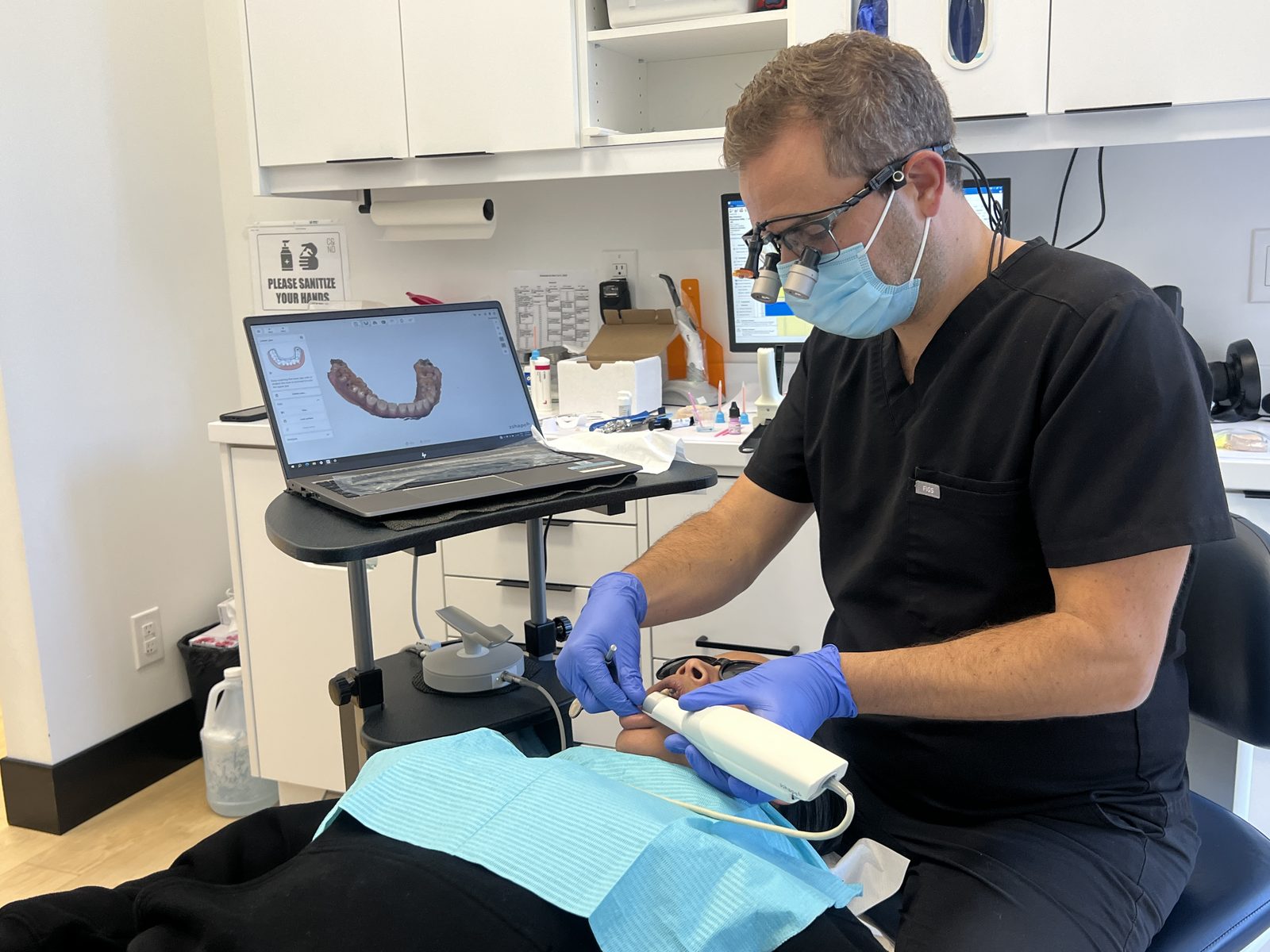
The tooth is shaped so the crown can fit over and restore it appropriately.
Make the restoration
Records of the prepared tooth are used to create a crown designed for that tooth.
Protect the tooth while the crown is made
When appropriate, a temporary restoration protects the prepared tooth until the final crown is ready.
Place the crown
The final restoration is evaluated for fit, appearance and bite before it is secured to the tooth.
Crown materials
The material depends on the tooth.
Dental crowns can be made from different restorative materials. The appropriate choice depends on factors such as where the tooth is located, the forces it receives, the condition of the remaining tooth and aesthetic considerations.
We recommend the material based on the clinical situation rather than treating one material as the right choice for every tooth.
Common questions
Common questions about dental crowns.
How do I know if I need a crown?+
An examination and, when appropriate, dental X-rays help us understand how much healthy tooth remains, where the damage extends and whether a filling or another restoration would provide enough support.
Is a crown better than a filling?+
Neither is inherently better. A filling restores a selected portion of a tooth, while a crown covers substantially more of it. The appropriate restoration depends on the condition of the tooth.
Does getting a crown hurt?+
Local anaesthetic is typically used when a tooth is prepared for a crown. Some temporary sensitivity or tenderness can occur afterward.
Does every root canal need a crown?+
No. The appropriate restoration after root canal treatment depends on which tooth was treated, how much healthy tooth structure remains and how the tooth functions.
What are dental crowns made of?+
Different restorative materials can be used, including ceramic-based and other dental materials. The choice depends on the tooth, functional demands and aesthetic considerations.
How long does a dental crown last?+
There is no fixed lifespan for every crown. Longevity depends on the tooth, the restoration, the forces it receives, oral health and changes that occur over time.
Does an old crown automatically need replacing?+
No. We assess the crown and the tooth underneath it based on their condition, fit and function rather than replacing a restoration simply because of its age.
Can a crown fix a broken tooth?+
Sometimes. Whether a crown is appropriate depends on the location and extent of the fracture and whether enough healthy tooth remains to restore the tooth predictably.
Related care
Think you may need a crown?
We'll assess the tooth, explain how much healthy structure remains and discuss the restoration that makes sense.
Or feel free to email us at reception@smilemail.ca. We reply to appointment requests within one business day.